G2 Build Room
Describe a business in one sentence and watch a working app get written, compiled and sandboxed.
- Role
- Co-founder and lead engineer
- Year
- 2026
- Stack
- Next.js 16, React 19, Claude Opus and Sonnet, Server-sent events, Babel compile gate, Sandboxed iframe, Vercel Blob, Resend
g2builds.com
- measured cost of a full Opus build, 489 linesMeasured · source
- $0.43
- AI edits per visitor, counted in a signed cookieCounted in the repo · source
- 5
- tests, including WCAG contrast pinned to the tokensCounted in the repo · source
- 33
The problem
Selling custom software to a small business starts with showing what they would get. A mockup does not answer whether it would work for them, and a live demo usually means a sales call.
What I built
- 01Streaming generation over server-sent events with a delimited text protocol, so code appears as it is written and a delimiter split across chunks is handled.
- 02A compile gate: every file passes Babel on the server before the browser sees it, and a failed build is not charged against the visitor's five changes.
- 03A sandbox with scripts allowed and same-origin denied, a tiny module loader over a virtual file system, and one boot path shared by the preview and the download.
- 04Cost and abuse controls labeled for what they are: an HMAC-signed budget cookie, per-IP rate limits, a soft daily ceiling, and Origin checks on every POST.
- 05An SSRF-hardened 'import my current website' endpoint: HTTPS only, private and metadata ranges refused, no off-host redirects, capped reads.
- 06Deterministic first: the page is written from a pure template before any model call, so a missing key degrades to a working page, never a spinner.
More screens
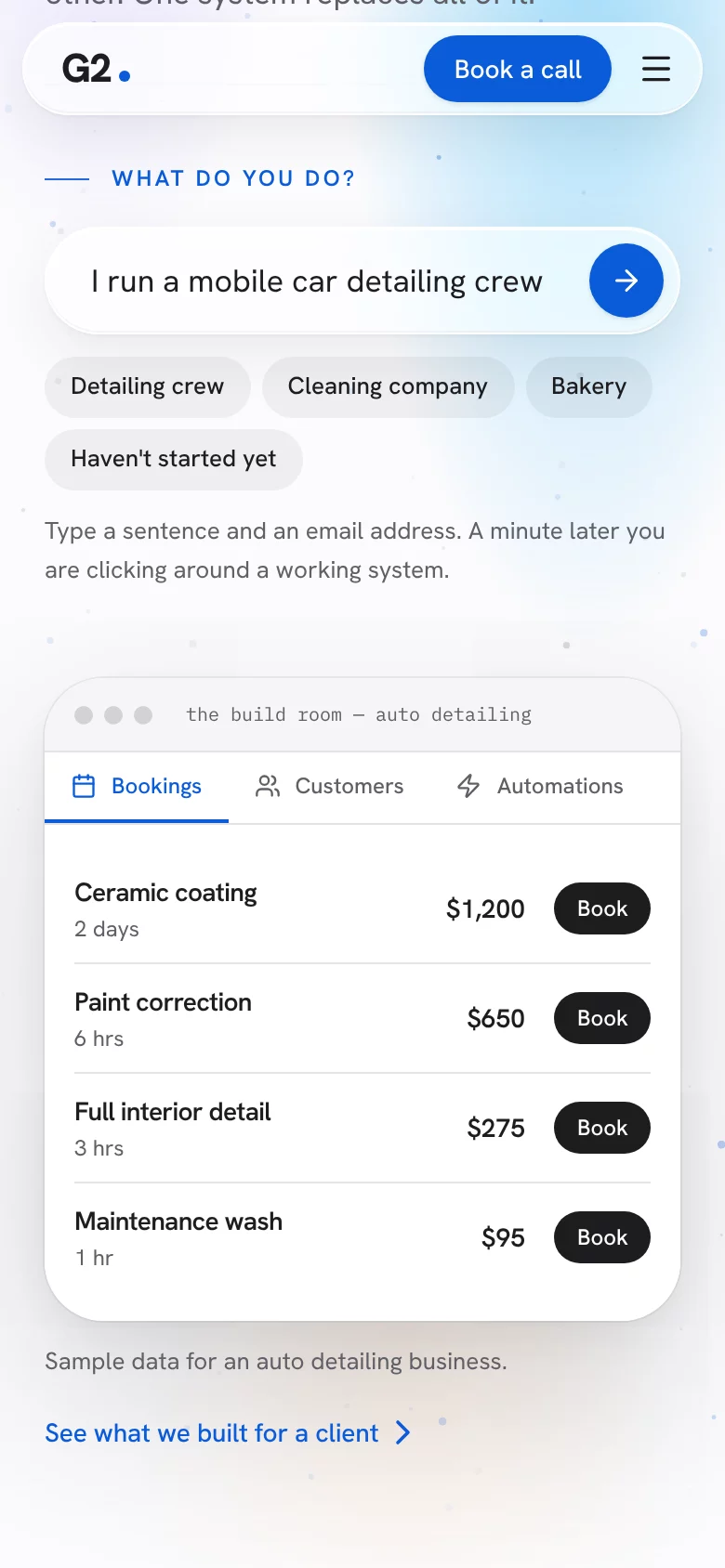
g2builds.com/build
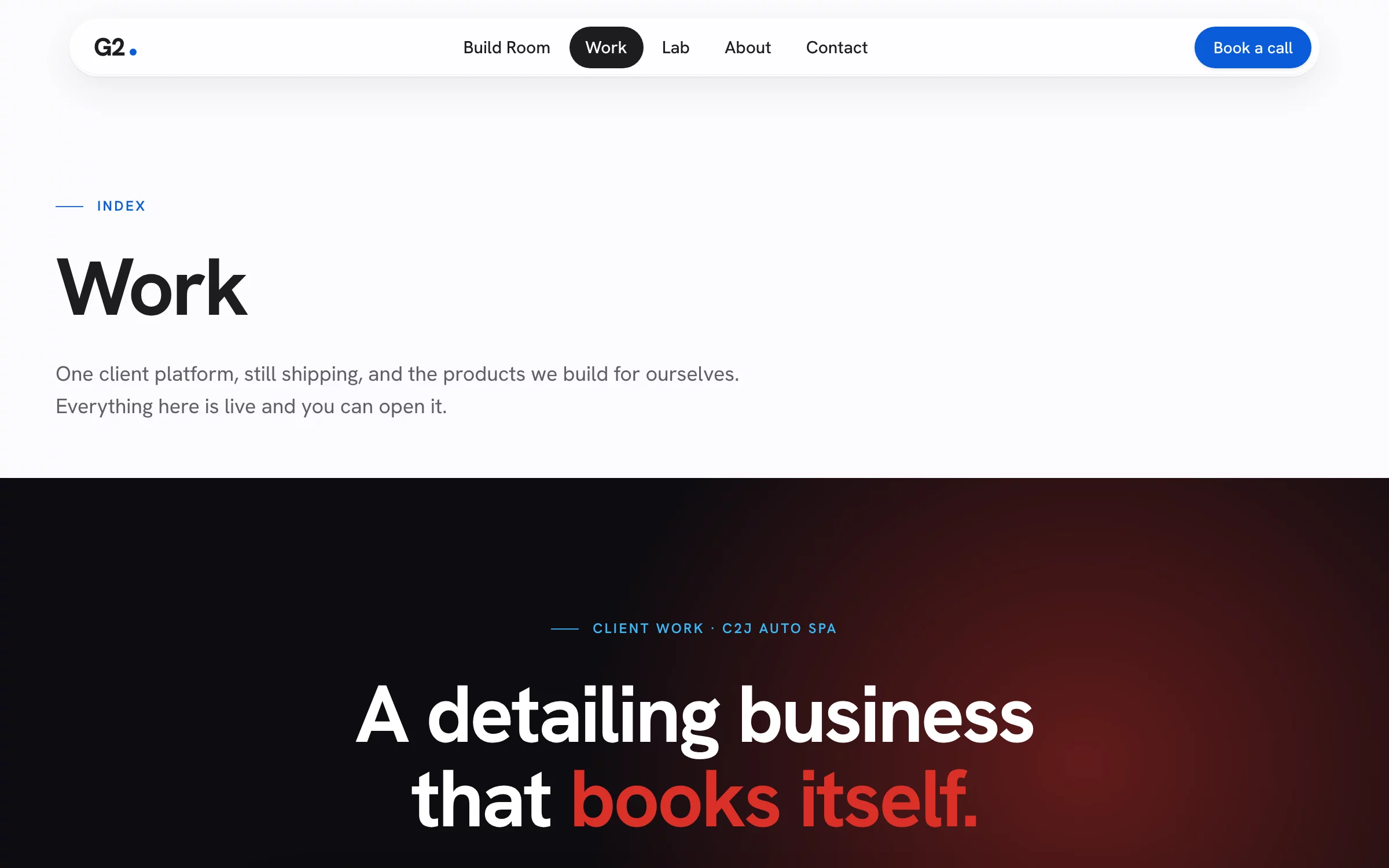
g2builds.com/work
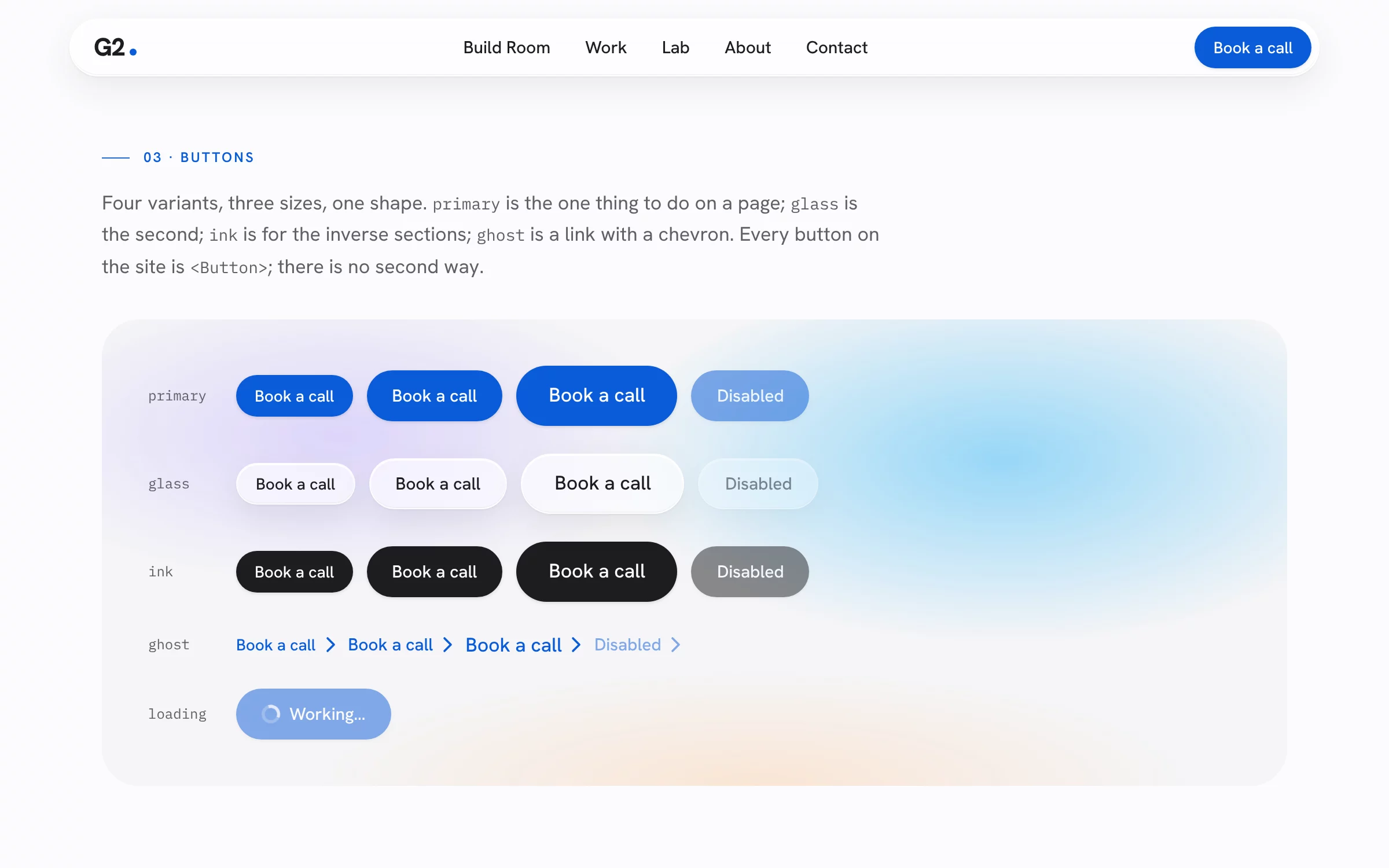
g2builds.com/system
Decisions
Opus for the first build, Sonnet for edits
Measured on the same brief, Sonnet was faster and a third of the cost. The first build is what a visitor judges, so quality won there and speed won for edits.
Structured output through a forced tool call
The response schema is a tool's input schema, so the API rejects malformed output instead of the app's JSON parser.
Not claimed
- The console on the homepage uses labeled sample data.
- Voice mode is built and tested and switched off.
- The streaming Claude build needs a live key, so the films here show the deterministic first render, not the model writing code.